Protected wildlife
Bats and Roofline Work in Staffordshire
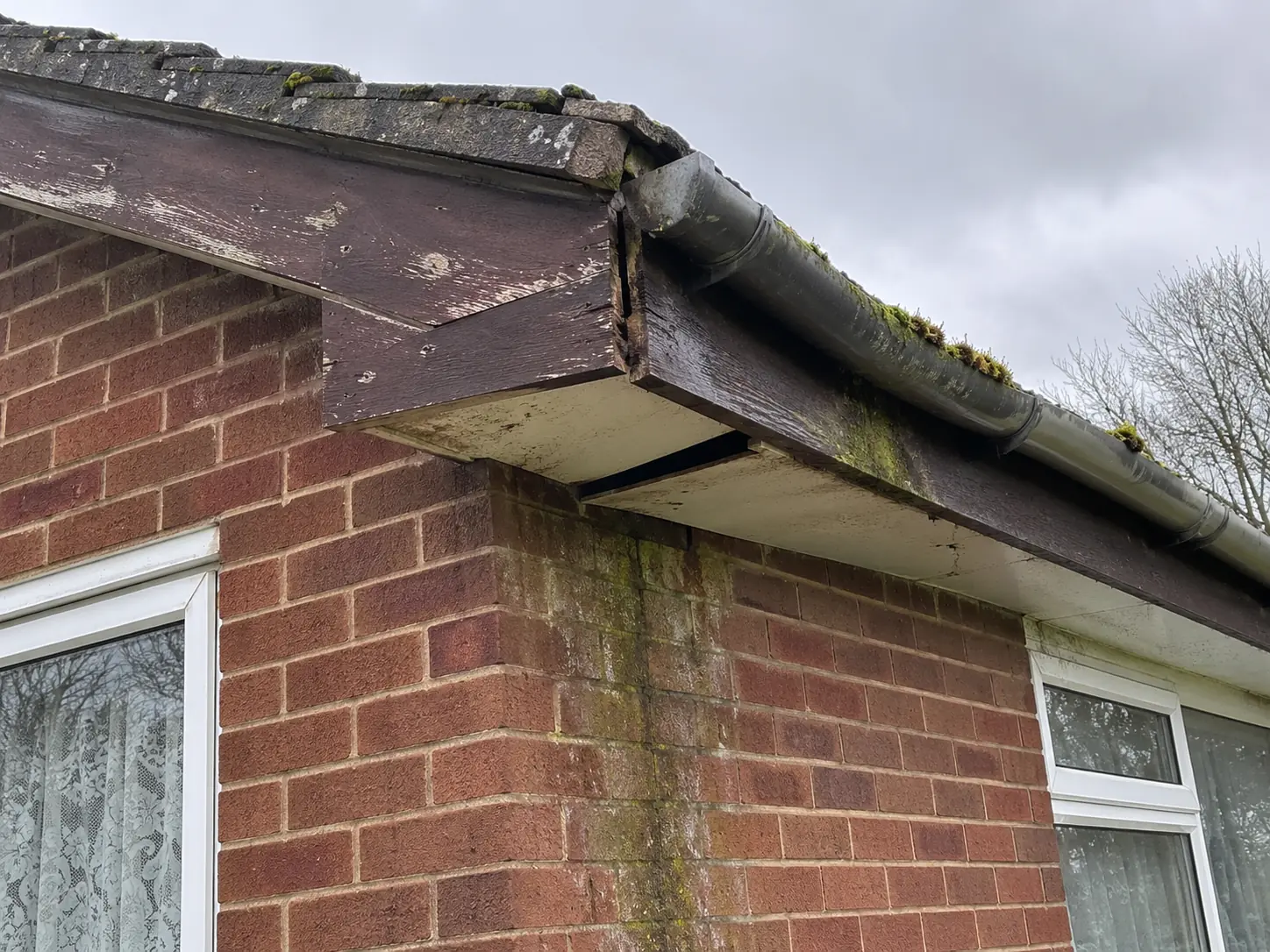
A small opening behind a board can be a way in for a bat or a nesting bird. Both are protected, so bring them up while the job is still being planned, not on the morning it begins.
Key facts
- Bats, breeding sites and resting places are protected
- The roost protection applies even when no bat is there
- Active wild bird nests are protected too
- Get expert advice before closing a suspect gap
The legal position on bats
All bat species, their breeding sites and resting places are fully protected by law – they’re European protected species.
GOV.UK: Bats, protection and licences
The guidance, issued by Natural England with the environment department, lists things that break the law. Two are easy to do by accident during eaves work:
damage or destroy a breeding or resting place
GOV.UK: Bats, protection and licences
obstruct access to their resting or sheltering places
GOV.UK: Bats, protection and licences
A snug new soffit fixed across an entrance could do the second. Separate Natural England advice, written for councils deciding planning applications, makes clear that the roost offence covers places
(including when bats are not present)
GOV.UK: Natural England, bats and planning decisions
On penalties, the protection guidance names a prison term of up to six months and an unlimited fine, either or both.
Why Stafford eaves are worth a look
Roof work features on the government’s list of things that may affect bats, in the words repairing or replacing a roof
. Natural England’s planning advice also picks out buildings that
are close to woodland or water
GOV.UK: Natural England, bats and planning decisions
have cracks, crevices and small openings
GOV.UK: Natural England, bats and planning decisions
Stafford has rivers running through it and Cannock Chase close by, and ageing timber eaves can develop slots and cracks. None of that shows that your house holds a roost. It is simply a reason to look and ask. Remember too that the planning advice is aimed at planning decisions; it is no test you can apply to your own home and pass.
What to mention
- Bats leaving or arriving near the roof around dusk
- Small dark droppings collecting below one particular gap
- Squeaks or rustling from inside the eaves on warm evenings
- A past survey, or something a previous owner told you
Seeing none of these does not prove a roof is empty. Please do not probe holes, shine a torch in or block anything up to find out.
Surveys and licences
In many cases you should be able to avoid harming the bats or damaging or blocking access to their habitats. You’ll need an expert to do a bat survey.
GOV.UK: Bats, protection and licences
To find a surveyor, GOV.UK points readers to the CIEEM members’ directory and to Environmental Data Services. Where harm cannot be avoided, it describes a licence route:
If you cannot avoid harming bats or their habitats, you can apply for a mitigation licence from Natural England.
GOV.UK: Bats, protection and licences
Households that suspect a roost at or beside the house can also try the National Bat Helpline, a Bat Conservation Trust service offering free advice, for instance on minor jobs. It has a firm limit:
They cannot provide advice for building works that need planning permission.
GOV.UK: Bats, protection and licences
Birds in the eaves
Gaps at the roof edge can hold nests as well. GOV.UK is direct about it.
All wild bird species, their eggs and nests are protected by law. You must always try to avoid harming birds or to use measures which do not kill or injure them before considering taking harmful action.
GOV.UK: Wild birds, protection and licences
One of the ways it suggests for avoiding harm is
timing your work to avoid the breeding season
GOV.UK: Wild birds, protection and licences
If birds are going in and out under your boards, mention it in your note, and let the timing be planned around them.
If something is found part-way through
Settle this before the first board is removed: work at that spot stops, nothing is handled or sealed, and advice is sought. Ask each firm to tell you its own steps for such a find. A vague answer is a reason to keep looking. For everything else to raise, see questions for installers.
Noticed droppings, a nest or movement at the roof? Put it in the note box.
Start a Stafford quoteRaise wildlife first
It costs nothing to mention it, and it helps any visit to be planned properly.